Tuesday, January 22, 2008

Trainor Teaches: The Basics of Team Strategy

Nation,

One of the best things about coaching or captaining a team in any sport is formulating a strategy and seeing it realized into a victory. Personally, some of my best moments as a captain in ultimate have been defeating much more highly touted and experienced teams (at different levels) with a well thought out game plan. That undergrad business degree with a major focus in strategic management is useful at times.

I, like so many others, also love the role of Monday morning quarterback in many sports. We all seem to be able to detect what to do after the fact. Jacksonville should have rushed New England more. San Diego should have gone for it on first down. Dallas and Green Bay should have gone with more run and short pass plays. More often than not, the people I converse with know their sports and their assessments are very good.
Suttron Versus Scott "Beast" Stinson
Photo Source: Ultypics.com

The difference between those that do and those that watch is simple: Knowledge of the basics of strategy. Not just one way, or end results, but a through grasp of overall strategy.

There are many ways to win in Ultimate. Outrun. Outplan. Outthrow. I think teams on the cusp of National, UPA and Worlds contention have to do a lot more on the strategy side to compete with the Sockeye and Furious of this world. "Playing Your Game" and "Just focusing on ourselves" doesn't quite cut it.


Thanks to the teachings of Dr Eric Buckholz, I can offer up a little primer of the 4 major blocks of strategy:
  • GO (with your strengths)
  • DENY(the strengths of others)
  • EXPLOIT
  • PREVENT
Before I explain each, it should be noted that EXPLOIT and PREVENT are often complimentary to each other.

GO (with your strengths)
Pros
  • Under this strategy, you get to use your strengths and talents
  • Usually accompanied with confidence (You're focused on what you do well)
  • You force the opposition to be reactive, and not proactive
Cons
  • Ignores the enemy gameplan
  • Enemey might be able to easy defeat your strength
  • Relies on ability to control game to use your strength. No control =no strength
  • The enemy is looking for it
Best to use on Offence or Defence?
  • Offence, because defence is more reactionary in nature
DENY(the strengths of others)
Pros
  • Use prior knowledge to your advantage
  • Prepare team to use strengths to deny
  • control of the game/ frustrate usual strength of opponent
  • Focus on opponent makes you unpredictable
  • Overcome talent difference
Cons
  • Might not work if enemy changes plan before or during the game
  • Despite your efforts, you might be unable to stop your opposition
  • Does not focus on your strengths
Best to use on O or D?
  • Usually a defensive strategy, reactive in nature
  • You could use on Offence, with regards to killing the clock
EXPLOIT
Pros
  • Psychological factors ( positive for your team, negative for opponents)
  • Plays the percentages (High chance of success)
  • Usually allows one to use their own strength
  • Takes advantage of good scouting and research
Cons
  • May not have great strength in the area you need to exploit
  • May open up your own weaknesses
  • Does not consider counter plans or surprises
Best on O or D?
  • Offence
  • Offence allows you more control in most sports, and allows you to better engage in exploit tactics
PREVENT
Pros
  • Reduces unforced errors
  • Easier to limit enemy gains
  • At times has the element of surprise
  • Great strategy for late in games with time limits
Cons
  • Might very well limit your strengths
  • You might not be able to stop your enemy, and lose valuable time in the process
  • Can change team/player performance in a negative way
  • This strategy still allows the opposition to make plays
Best on O or D?
  • Can be easily used for both. It's a low risk strategy that is effective in games with finite time limits.
  • Especially effective near the end of games

Monday, January 21, 2008

Trainor Teaches: Why Sports are a War

Nation,

Yet another article inspired by the NFL playoffs.

If you ever want to get a true sense of the modern Olympic movement, take the time to read David C Young's book The Modern Olympics: A Struggle for Revival. It is highly regarded as one of the two best books on the history of the Olympic movement. Learning ancient Greek and tireless decades of research lead to a great account of the Olympics ancient and modern.

One of the major themes discussed in the book is the characters that lead to the Olympics being restarted in 1896. While a french man, Pierre de Coubertin, is credited as the father of the modern Olympics, he naturally built on the work of others in his era who had similar goals. He's a legend today because of global vision, luck, and partners. William Penny Brookes is a much less celebrated name who did more to invent the modern movement than his French counterpart. You probably don't know either, but you know Brookes much less. :)

One common theme: They both saw sport as a way to ensure the health and fitness of their country's youth, who in turn would be better prepared for war as a result of such strategic games and events.

And that is why you have such comparisons between sports and war.

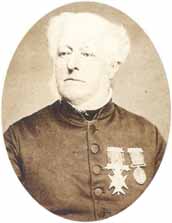
William Penny Brookes
Photo source: http://www.zappas.org/

The NFL is definitely a war. Physical and mental attrition. Strategy. Generals and leaders calling plays. Specialists. Ditto the NHL and ultimate.

Yes, our beloved hippy game is a game our army should approve of. Physical fitness. Motor skills and hand eye coordination. Strategy and team building. Everything but the bloodshed.

Given this, it's no wonder we use war analogies. It's silly to compare the atrocities of war to anything, but unlike most analogies or cliches used in sports, there's a lot of truth to it.

NFL Excitement- Deliberate Awesomeness

Nation,

We are in the final stages of one of the greatest seasons in National Football League history:
  • A team threatens to go 19-0 for the first time ever.
  • Tom Brady and Randy Moss set single season records respectively for their TD prowess.
  • Brett Favre has a career year at 38, breaking career marks every week and telling everyone how much fun he's having.
  • Green Bay is relevant again and the bikini ladies don't mind the weather. New York, Dallas, Boston, bring LA back and put them in the playoffs and you have the perfect storm.
  • Tony Romo's doing the nasty with Jessica Simpson. (Stop talking about the vacation people)
  • Pacman Jones is making it rain at some joint far away from the NFL (NFL's new image policy being warmly received).
  • Vick is put to jail.
Okay, so the last three are more dubious than great. But the real reasons I just stated make this year memorable. Outside of these great feats, the NFL playoffs have been the usual great success.

Why is NFL football so exciting, and how can we apply its success to ultimate?

I'm not implying that Ultimate is anywhere near the position to try and compete with pro sports. However, given the amount of money we all spend play competitive ultimate, we might want to look at anything that builds up the sport and adds revenue to leagues/groups/teams.

Here are some of the things I think the NFL does well, that we can learn from
  • Every year, we know when the NFL plays, where they play, and where to find it.
  • Like a great co-ed or multi division tournament (Clambake plug right here), the NFL game is an experience. The tailgate party, the costumes, the characters. Should we expect to have both the experience of the fun tournament with the best teams? It seems like a hard balance, but unfortunately we seem to be experiencing a divide in the fun/competitive tourney. I hate having to choose a good tourney like Cazenovia over fun tourneys like Northern Flights.
  • You know it's going to be a 16 game regular season. 162 game regular seasons in baseball is an example of a sport that overextends itself.
  • Further to being overextended, ultimate finds itself (for reasons of geography, cost, egos) with far too many tournaments occurring at the same time. It is only at nationals that the best face off.
  • Needless to say, the NFL is a marketing machine that has huge TV contracts. Far below this stratosphere, sports like Ultimate are relying on Ultivillage and little else to document and showcase. Could we not be doing more to get the game on TV/ Internet stream/ etc. The answer is yes.
  • The NFL goes to great length to understand their sponsors and partners, and to cater to them. They understand that sport sponsorship is no longer philanthropic. What's the benefit ratio to your team/league/tourney sponsors? This is the kind of thing good partners want to hear from you.
  • The NFL pays a lot of money to secure the right people for the right job. For every thousand volunteers at Super Bowl, a person at the top is highly paid for a reason. In ultimate, we let politics and the volunteer concept get in the way. Is it a case of people being burned by paying bad people in the past? Maybe. However, there are ways to ensure compensation reflects performance.
  • The NFL shares. Money and resources.
At one point in time, american football was a break away sport from rugby, growing through colleges and universities. Sound familiar doesn't it? These things take time and the right people, but it's nice to have benchmarks and great examples to learn from.

Those are some of my ramblings.. feel free to jump in...

Thursday, January 17, 2008

Canada Ultimate en Espanol

Nation,

Through some site tracking I found my first Talking with Trainor link and translation. It appears as though Jimmy P is big in Columbia.

Wednesday, January 16, 2008

Who stole the Logo? Discraft versus Gaia

Nation,

Starting to play the game in Ottawa in late 2001, I soon became aware of GAIA Ultimate and their apparel. Their clothes were never hotter, as sales of cleats, clothes and ultimate paraphernalia wasn't just available at local tournaments, it was the thing to do (purchase). The fact that GAIA lost much of its moment due to various reasons (high price, poor service, slow shipping, logistics and distribution, etc) is a different story for a different article soon to come.

Our sport knows the Discraft disc company as well. It's the disc of choice for almost all competitive players in North America. Enough said.

I was looking through an Ottawa based ultimate picture site (www.ultypics.com) and viewed some pictures of the world beach ultimate championships in Brazil. Among the many great pictures taken by Greg Lays, here is one that left me wondering:


  • Does anyone notice the Discraft signage in the background?
  • Doesn't that logo look disturbingly similar to the Gaia logo?
  • Who is copying who?
  • Has there been some kind of merger that hasn't been discussed in Ultimate and hasn't been posted on either company's site?

Tuesday, January 15, 2008

Evaluating Leadership In Ultimate: Learning from JFJ's woe

Nation,

By now, I am sure everyone in Canada knows about the current woes of the Toronto Maple Leafs and the chaotic job status of their General Manager. John Ferguson Jr has fallen on hard times and seems to be a dead man walking as seen here . Let me state the obvious:

  • The situation (replacing their GM) is being handled poorly
  • There are far too many people involved in the leadership structure at Maple Leafs Sports Entertainment (MLSE) with regards to hockey matters
  • People that hate the leafs enjoy this way too much
  • The media has an uncanny ability to press issues
  • I'd like to discuss it a little today and relate it to ultimate.
I have a bit different perspective of the situation than most. Thanks to my excellent advisor at Western, I've met MLSE President and CEO Richard Peddie on multiple occasions. Meeting him one on one and in group situations, it is very apparent that he is an excellent CEO. He makes MLSE A LOT of money. He's confident, he's charismatic (which he has failed to show on camera lately), and he's diligent. I'm met a lot of Canadian sport executives in the past 2 years, and I would venture to say that he is the best read in terms of executive leadership. We're not talking paperback books by Trump, legitimate authors that academics love and respect. Despite all this, he's suffering a lot of bad PR. Blame the media, blame some poorly executed comments, blame
the on ice fate of the team.

Above Peddie comes a Board of Directors representing the many owners of the team. The have varied interests and egos. World domination and return to the shareholder is a common link. Most prominent is Chairman Larry Tanenbaum.

Below both of these titans is John Ferguson Jr. He's been in power for roughly five years. His main job is to ensure the club's on ice performance, and he's failed. He hasn't traded well. He hasn't signed great contracts. His scouting staff is large but he hasn't drafted well. Overall, his biggest failing (in my opinion) has been the ability to develop a vision and stick to it (Youth, Win Now, Team strategy, etc). For most of his tenure, JFJ got the benefit of the doubt. Despite not being a big name, he has NHL pedigree in his family, a law degree and an extensive NHL record working in player development.

The good times are over. Both Peddie and Tanenbaum seem ready to replace him with an older and more experienced men. Why the team in Toronto needs a president over 70 (Cliff Fletcher, Scotty Bowman) boggles my mind.

My questions are this:
  • Why is the same media calling for the head of a GM that they personally lobbied for a contract extension in the summer. Does the media have any long term memory?
  • Why do fans jump to conclusions on their teams in the midst of slumps and streaks?
  • Why would a team with such great leadership be so swayed by a media backlash?
__________________________________________________________________
How does this relate to Ultimate?

Ultimate teams and players don't have a lot of media to deal with in tough times. I am thankful I didn't have to face the media after nationals last year (my team had its "wheels fall off"). However, there is a throng of people in the community with their own agendas and their own ideas of leadership and organization evaluation.

This year, I saw a man lose his paid ultimate job ("resigned", as it seems everyone does in the association) because of persistent pressure (and some propaganda) from league members and a board that has very little private sector/sport leadership experience to draw from. Captains of the field yes, captains of industry definitely not.

This man was not perfect. He had failings in his management style. However, he had held his position for over 7 years and was a huge source of tacit knowledge with regards to fields, local politics, youth programs, comp programs and the league itself and oversaw huge growth. However, various groups (some very good people among them) personally came to dislike the man and he went from popular to out of the picture very fast. Didn't like his personality, resented his being paid, and the list went on.

We're not the media and we shouldn't eat our own without valid reason. Taking someone's source of income away from them is a very serious manner, and I resent the mob mentality in ultimate as much as I do when sports media attacks a team on a 5 game losing streak. If someone is doing a poor job by the evaluation goals set out, sack them by all means.

It seems very easy for volunteers and league members to slag online and attack petition online with the previous mentioned mob mentality. However, we should make sure we elect/appoint boards and staffs that do the right thing. True leadership looks at the big picture. It sticks to the vision. It can be counted on in times of crisis. If your association or team doesn't understand that, you're lose valuable people and ultimate loses.
___________________________________________________________________
I predict JFJ will be fired and the coach (Paul Maurice) will need a miracle. Peddie will relinquish his President duties and remain the CEO. A more media friendly face will represent the team. The team will still suck. Leaf Nation will still scream for Dougie Gilmour and look at grainy black and white victory parades from 1967.

I love the salary cap!!


Sunday, January 13, 2008

Trainor Teaches... What I learned from the Stanley Cup Champs

I just want to give a shout-out to the Americans who have been loyally coming to the site. Please fire me off an e-mail (if you like) to tell me a little about yourself, your teams, and so on.

Nation,

One of my new year's resolutions regarding this site is to post more think pieces borrowing on the strength of my master's degree and teaching awards. I will enjoy it, the game needs it, and it might make for a great read. This one will be very bubble gum, but I've got to use these pictures somehow. :)

This Christmas, I spent the holiday season with the Praha Princess and her family in Vancouver, Canada. One of the many activities we did during our stay was to mentally beat down scalpers and score some great seats to a Vancouver Canucks/Anaheim Ducks NHL hockey game. For a guy who loves the NHL so much, I don't really enjoy going to the games that much.

However, being so close to the ice allowed me to watch the defending Stanley Cup Champions during their warm-ups. Here were some of my observations

  • There was almost zero mistakes in the 20 minutes I watched. Not a mix up in the drills, nor a mistaken pass. I've watched Finals warm-ups in ultimate and they don't have the same level of efficiency. (Maybe legendary DoG has gotten to this point)
  • Given how crowded less than 100 feet of ice is with 20 players (average height over 6'2 and weight over 210 I would guess), the awareness shown by players was refreshing. They've done this thing over and over, but they are always making space and adjustments at a fast speed.
  • Different players do different drills outside of the basics. This makes sense, and it is something Canadian ultimate teams should look into.
  • There wasn't anyone wearing an ipod with headphones or engaging in activities that ignore the team concept. It always bothers me when players do this during warm ups.
    Equal effort was given by multi million dollar players (Pronger, Scotty Neidermayer).
  • Some players are entertainers and know how to play to the crowd while carrying on their business. I have a whole new opinion of Doug Weight, Todd Marchant, Ryan Getzlaf, Mathieu Schneider and Todd Bertuzzi. I don't think Ultimate players are lacking in showmanship skills, but finding a balance is no easy act.
All photos: courtesy Jitka Licenik